
If you watch television or scroll through social media, you’ve likely seen ads promoting the BUILD plan, either by the Realtors, urging you to contact your legislator to support it, or by Pritzker himself. In an ad that aired just a week ago, Pritzker promised that his plan would reduce housing costs by cutting red tape, speeding up approvals and updating regulations. But you have to watch closely to see what the “BUILD plan” is all about: a major change in zoning across Illinois impacting traditional single-family subdivisions.
The reality is that this is an under-the-radar, stealth attempt to end single family zoning as we know it. The bill does not take into consideration local circumstances. What’s worse, Pritzker and the Democrats are attempting to move it through without any discussion or local consensus but with deceptive advertising claiming it is simply about “reducing red tape.” Rather than engage the community leaders who, in town after town, oppose the bill, they are attempting to steamroll them by passing the bill with little public discussion and, quite possible, in the middle of the night while everyone’s distracted with the Bears and the budget.
I oppose these actions, and call on readers to tell their legislators to stand against it.
Here’s what to know about the current version of the bill, SB640 as amended through the “shell bill” or “gut-and-replace” process. This seems to be the bill most likely to be moving forward.
Amendment 1 was filed on May 21st, and passed by the Executive committee on May 26th.
Amendment 2 was filed yesterday. This bill’s key provision is the stripping of municipalities of their ability to restrictively zone housing. Specifically:
- No town may require a lot area of greater than 2,500 square feet for a detached single family home.
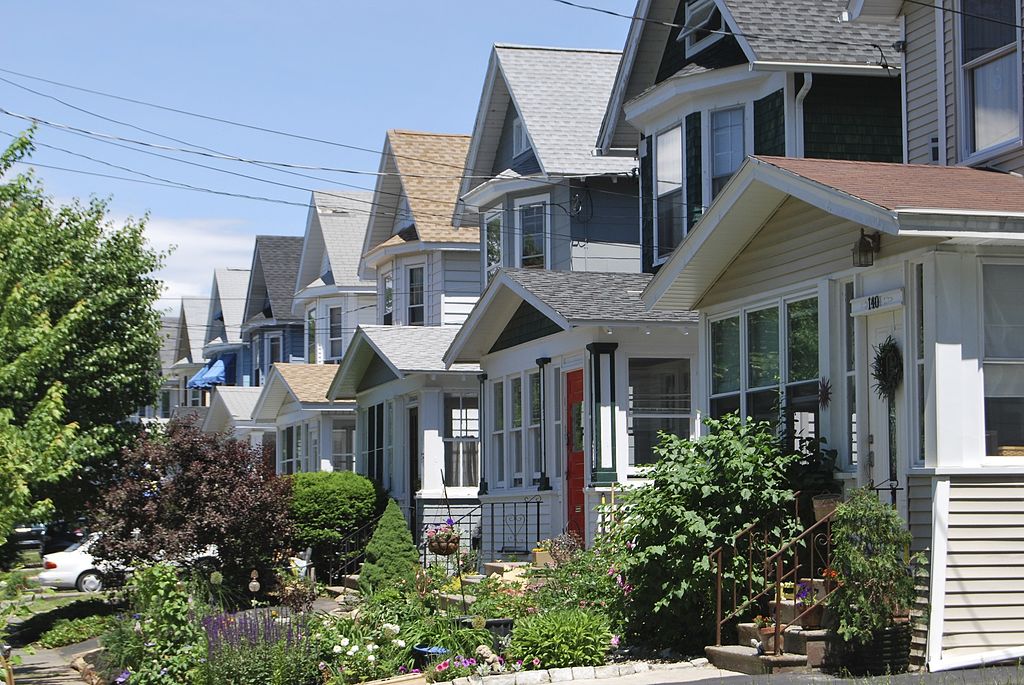
- For any lot greater than 2,500 square feet, a town must permit as many as four “dwelling units” — rowhouses, a 4 flat, etc. This is what is meant by “middle housing” – neither single family nor large apartment buildings.
- For any lot greater than 7,500 square feet, up to six units must be permitted, though a town can choose mandate or waive a set of “affordability” requirements. (That is, a town wanting to minimize larger units could gamble that choosing not to waive affordability requirements would make it less likely that 6 rather than 4 units would be built.)
- Additions would also be permitted to add multiple apartment units.
- Finally, towns would be able to adopt “standards . . . that govern form and placement of middle housing” but not if those standards would have the effect of “prohibiting or materially impeding” the construction of middle housing.
Now, I want to be clear: as I explained previously, areas like Arlington Heights and its neighboring communities in District 53 and the surrounding areas absolutely need more “middle housing” as replacement for the “starter homes” which have been lost through the years, either torn down or with additions. Some of the provisions in the bill would be sensible ways of accomplishing this, if they were adopted with local consensus, such as a provision that new housing should “comply with the existing context of the neighborhood” in matters such as green space, lot coverage, and design. But a far-reaching and stealthy bill is wrong.
Beyond that, there are a few red tape-style waivers. The bill also temporarily exempts “middle housing” from certain more onerous energy efficiency demands. It exempts them (as well as single family homes of less than 1,500 square feet) from mandates for EV charging capacity or adaptability. But other “affordability” reform bills initially promised by Pritzker have apparently stalled. For example, SB4061 would have allowed smaller apartment buildings to have a single stairwell, but there is no recent action on this, and it’s not a part of the new bill being promoted. This honestly makes Pritzker’s entire claim suspect: it seems that in the end, the part of the BUILD plan which he tries to keep unnoticed will be the core of what passes and his promises of cutting red tape and onerous demands may not materially come to pass at all.
Plus, other housing-related bills apparently moving forward, as described by Capitol News Illinois, have nothing to do with “red tape” or bureaucracy but push a progressive social agenda, for example, SB332 Amendment 1, a gut-and-replace bill passed by the Executive committee on the 26th, would require any owner of a multifamily building (without any exception for a traditional two-flat with an owner living in one of the units) to go through a drawn-out process of giving a tenant’s association a right of first refusal (with a 90 day delay) for purchasing the building. SB608 Amendment 1 (also a gut-and-replace) would prohibit work requirements for any subsidized housing recipients. And SB635 Amendment 2 (another gut-and-replace) would allow any religious organization to build up to a six-story apartment or condo building on any land it owns regardless of existing zoning code.
Pritzker and his allies are pushing this agenda as “transformative” and it may well be — but if citizens do not take action, we may will be very unhappy with the transformations that will occur.