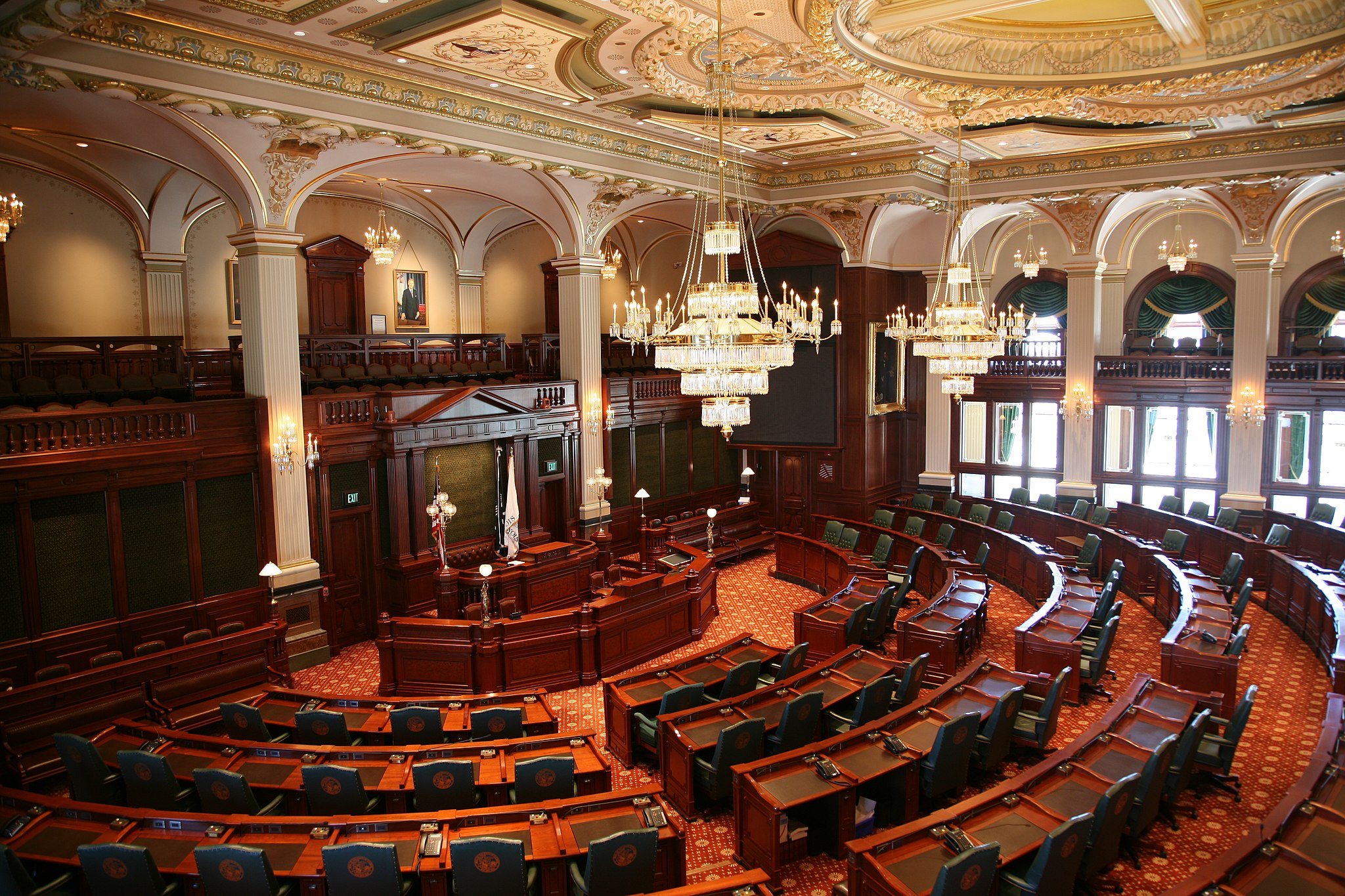
What are the House Rules? Sounds like such an obscure issue it couldn’t possibly matter but it’s crucial.
You see, Illinois ranks worst among all 50 states not simply in various economic or budget metrics, but in how the government functions itself, in terms of how much political power is concentrated in the House speaker. Right now, the House Speaker has complete control over which bills can come up for a vote, in a way that doesn’t exist in any other state. This was at the core of Madigan’s power, yet when he was ousted in 2021 and replaced by Rep. Chris Welch, proposals for reform were largely ignored, with the only substantive change being a 10 year term limit for the speaker.
What’s more, in addition to the Rules themselves, Welch has his own rule, the so-called “Welch Rule,” in which he will not bring a bill to a vote unless it has 60 Democrats willing to vote for it; that’s a supermajority of Democrats and means that any sort of reform is held hostage to the far left. As a recent example, the federal Big Beautiful Bill Act included a provision for federal tax credits for private donations of up to $1,700 towards school choice scholarships, but each state has to opt-in for students to benefit — and just before Christmas, Welch said he’d only put it up for a vote if 60 Democrats are on record as supporting it, and suggested that “school choice supporters need to build coalitions the way lawmakers did with transit legislation” — in other words, to engage in horse-trading (not that those supporters have much to offer other than the hope that legislators would do the right thing for children).
There is no path towards any reform when Rep. Chris Welch, or his replacement when his term is up, has total control over which bills come up for a vote. But the rules themselves need only a simple majority to pass. The rules are set at the beginning of each new legislative session, when the House convenes after a new election. In other words, there is one opportunity, and one opportunity only, for reformist Democrats and Republicans to work together to set the stage to enable future reforms, and that’s to insist that they will only vote on rules which include key reforms, including:
- Enabling a simple majority of legislators to discharge a bill from committee in a manner similar to the “discharge petition” process that played out in Congress recently to get the Epstein Files bill passed, to ensure that bills with bipartisan support are able to come up for a vote,
- Prohibiting shell bills by mandating that all bills must be read on three separate days, after they are in their final, amended form, and
- Setting a mandatory adjournment hour to prohibit late-night voting sessions.
Only if moderate, rank-and-file and reformist Democrats are able to work with Republicans would it be possible to pass any of the legislation that’s needed to turn Illinois around, and that can’t happen as long as Welch retains his exclusive power to decide what can be voted on.
Which means that it’s not enough for Republican voters to continue to vote for Republicans and throw up their hands that they are outnumbered by Democrats. Everyone in every district who is represented by a Democrat must call on that representative to support these reforms rather than just being beholden to the Party Leadership and voting as they’re told.
Make a fuss about it if they have a town hall that allows community members to speak. Go to their office hours and tell them where you stand and why it matters. If you’re a Democrat who came here out of curiosity, it’s all the more important for you to reach out to do this.
Yes, I know they’ll be afraid that standing up for the public good will harm their political career, but the only way reform can happen is if enough rank-and-file Democratic legislators are willing to stand up to their party bosses.
There are a multitude of other reforms we need, and they are all contingent on Rule reforms to end the backroom dealing and total party leader control. Without the ability of bipartisan moderates to bring bills to a vote, reforms cannot happen. Without prohibiting shell bills and 2 am voting, top Democrats will still be able to get their way and ram through what they’ve created behind closed doors. And don’t be fooled by claims that shell bills are needed because of the tight legislative calendar – it is the top party leadership that decides what the legislative calendar looks like. If there truly isn’t enough time for an open and transparent process, because the session starts in January and ends in May, then there’s no constitutional requirement to adjourn in May, and the legislature darn well better keep working. On the other hand, if the May adjournment is just an excuse for back-room dealings, then it’s time to stop putting up with that excuse.
And once enough Democrats stand up to party leadership and work with Republicans to make these changes, then that opens the way to other reforms.