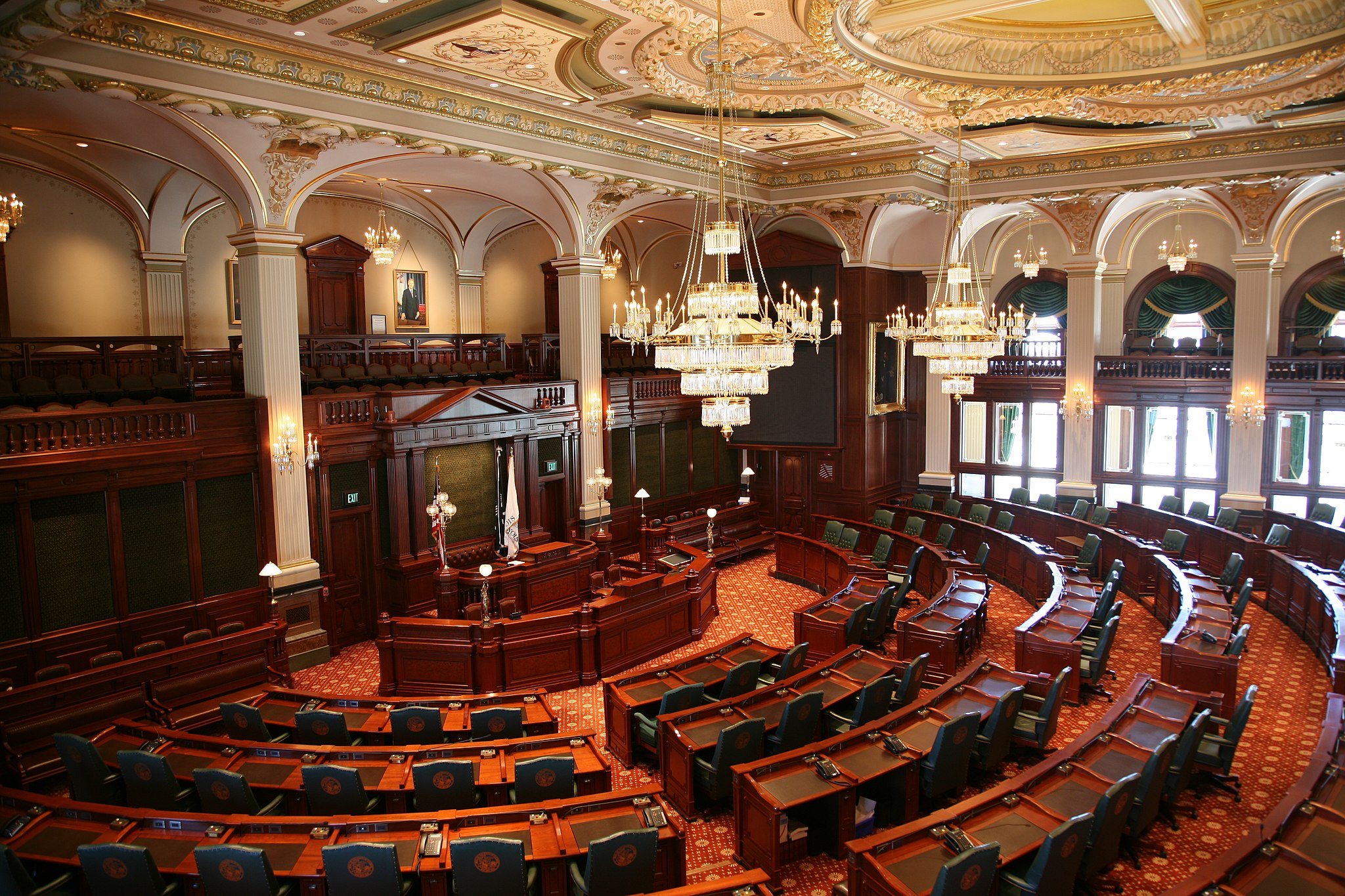
Last Thursday night — or, rather, in the early hours of Friday morning, Illinois ended its veto session by passing three controversial bills:
- HB1312, the “super-sanctuary state” immigration bill, was passed in the Senate at about 10:30 PM and the House sometime around 12:30 AM.
- SB1950, legalizing assisted suicide, was passed by the Illinois Senate at 2:54 AM. This followed on passage of the House version in the evening hours of the last day of the Spring session.
- SB3141, the transit funding and toll-increase bill, was passed by the House at 2:15 AM and the Senate at 4:20 AM.
Of these, the first two were “shell” or “gut and replace” bills in which the usual legislative process was entirely circumvented, and the third was a partial “gut” with complete revision to the most significant element, the funding mechanisms, at the very last minute.
In none of these bills was the public afforded a meaningful opportunity to lobby their representatives in Springfield and share their concerns. The transit funding bill was particularly egregious in this respect, since the text was not released until 11:02 PM, that is, 3 hours before the House vote and 5 hours before the Senate vote and, again, after most people had gone to bed. Not only did the public not have any means to weigh in, but rank and file Democratic Party legislators were equally compelled to go along with their party leadership’s demands.
Yet too many politicians shrug this off as “just the way it is” and defend shell bills as necessary because of unavoidable tight timeframes. But it doesn’t have to be this way.
Here are three key fixes I believe we need to see implemented:
- First, an enforceable and ironclad anti-shell bill prohibition to maintain the constitutional requirement for three readings of a bill, drafted in such a way as to permit only amendments which moderately impact the bill rather than the current loopholes that render the requirement effectively unenforced. Alternatively or in addition, a provision requiring a three day delay between the release of the final version of the bill and the vote on it, with the bill automatically sunsetting in a month without it.
- Second, a prohibition on late-night passage of bills, by prohibiting votes after 5 pm or another fixed time.
- Third, because defenders of shell-bills and late-night votes justify them due to tight timeframes, an expansion of the Illinois legislative session from part- to full-time. It’s fun to joke that the legislative session should be as short as possible because that minimizes the amount of time they have to cause harm with destructive bills, but in fact a too-short session creates artificial constraints that enable party leaders to justify passing last-minute negotiated-behind-closed-doors bills. (Of course, on top of this, the part-time aspect of the legislature creates circumstances in which the “full-time occupation” of legislators is often one with conflicts-of-interest or risks of ethical violations.)
What would need to happen to make these changes?
The duration of the legislative session in any given year, the fact that it ends on May 31st and the only work done in the fall is the Veto Session, is merely a matter of calendaring decisions. There is nothing in the state Constitution that requires the General Assembly to pack up on May 31st, or to reconvene for such a short time period in the fall. To the extent that politicians’ justifications for late-night bill-passage and shell bills is the lack of time, this is something that’s very easily solvable — if the party in power and the leadership in power wanted to.
Of course, if that’s just an excuse for being able to pressure rank and file legislators or to be able to pass something without any public comment or reporting, well, that’s why we also need to prohibit late-night voting sessions and shell bills.
Strictly speaking, it simply shouldn’t be possible to engage in the legislative trickery of shell bills, since the Illinois Constitution itself requires that “A bill shall be read by title on three different days in each house before it may be passed” (Article IV, Section 8(d)). But the courts and the legislators have found a way around this through something called the Enrolled Bill Doctrine, where courts have said, being rather cynical, that the legislators get to police themselves in this matter.
In other words, the only way to stop them from engaging in these games to go against the will of the people and prevent “we the people” from engaging in the civic process of reading bills and lobbying our representatives, is an amendment to the constitution. And if language about “readings” and “it depends on the meaning of the word” means it can all be twisted too easily, then the amendment should be unmistakably specific – a definite waiting period from the final amendment to the vote, with a clear declaration that the bill is null and that legislators cannot waive the provision.
But in Illinois, our constitution has been amended frequently. If I succeed in winning your votes, I’ll introduce an amendment — and reach across the aisle to build support among rank-and-file legislators of both parties.