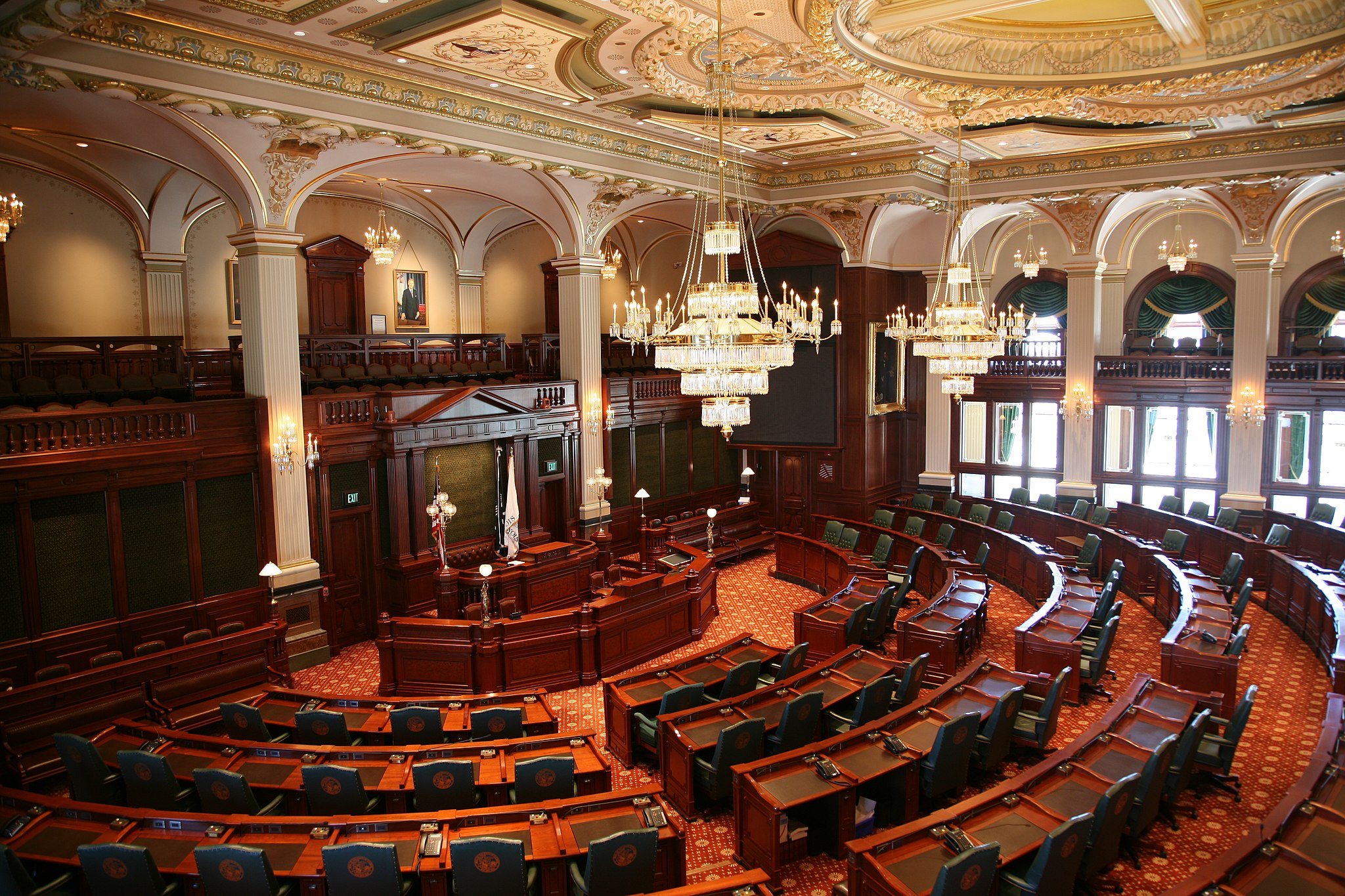
While the primary sucked a lot of air out of the room, more has been going on than simply that election, as the legislature in Springfield has once again proven its ineffectiveness. We’re at what amounts to halftime in the Springfield calendar – while we won’t know what new taxes will come with the new budget, last Friday was the deadline for non-budget bills to make it out of committee and the legislature is now in recess until mid-April.
One of my repeating themes is that the Illinois Legislature is broken. The House Speaker and the Senate Majority Leader have a monopoly on which bills come up for a vote and they prevent public input through shell bills and middle-of-the-night votes. The legislature doesn’t act on initiatives that are sorely needed, all the while wasting its time with bills that are costly, increase regulation, increase the micromanagement of our lives, or are just plain unnecessary.
Let me break it down.
1. What Springfield has Failed to Address
The following is a list of initiatives that Springfield should be focused on, but for various reasons isn’t touching.
- After the horrific attack on a Blue Line train back in November, Pritzker acknowledged that there was in fact a need for reforms to the SAF-T Act. There were even five new bills introduced in the House and Senate (HB4275, HB4907, HB4899, HB4906 and SB3136), all by Republicans. But neither the House nor the Senate Democrats were even willing to assign any of them to a committee, let alone consider any reforms, and because of the power structure, this means those bills are dead, regardless of wide public support.
- The federal government made it clear that their immigration enforcement operations were necessitated by Illinois’ refusal to honor detainers for jailed immigrants. But, again, none of the bills aiming to reform the TRUST “Sanctuary State” Act were assigned to a committee.
- A Senate Democrat, Lakesia Collins, introduced a bill, SB3795, which would have implemented meaningful guardrails on assisted suicide, which are sorely missing in the current law. In particular, it would have required a mental health assessment for anyone requesting assisted suicide, rather than leaving it to the discretion of the physician. Again, not assigned to a committee.
- Various bills were introduced in 2025 and 2026 to protect girls and women from transgender-identifying boys and men on girls’/women’s sports teams or using their locker rooms, including SB1226, SB3758, HB1117 and HB1216. Again, Democrats refused to move these forward.
- And the last “missing bill” is a bill with a viable path forward for the Bears stadium. It’s true that the “megaprojects” bill HB910 Amendment 1 passed out of committee in February, but it’s now being acknowledged that in its existing form the bill does not have enough support to pass. In fact, for the first time last week I read reporting that this isn’t simply a matter of Chicago Democrats trying to stop the Bears from moving out of Chicago, but that there is real concern about the entire concept of the PILOT tax breaks that shift costs and risks away from the megaproject developer and onto the backs of the taxpayers. In my view, and as I’ve said before, the entire concept of the “megaproject PILOT program” needs to be scrapped and some alternative reform developed if it’s truly the case that property taxes unfairly burden some businesses over others.
2. Bad Legislation that Could Cost All of Us
Meanwhile, there are several bills that will make our lives more costly. Hello, Democrats: Is this what you mean by being “laser-focused on affordability”?
- HB4416, being pushed by the all-powerful teachers’ unions, would enable employees at schools, other than teachers, who are employed during the school year, to receive unemployment insurance benefits during the summer. Of course, we all pay for it.
- HB3607 would dramatically change health insurance – and not for the better. It would prohibit copays, and limit deductibles to $1,000 and out-of-pocket limits to $1,500. This sounds great until you realize that insurance companies will still need to pay their bills, so it’ll drastically drive up premiums instead.
- There are bills for more pension buy-outs for both the state and for the city of Chicago that don’t really solve the problem but could actually make pensions more underfunded. I’ll have more to say about pensions in a later e-mail/article but you can read more about this in a great Wirepoints piece, “With Discussion Beginning About Pension Buyout Program For Chicago, Beware of Baloney.”
3. Bad “Nickel-and-Diming” bills
Here’s a list of bills that fall into the “nickel-and-diming” category. Regardless of whether the cause is good or not, adding more and more tiny fees and taxes is a terribly inefficient way of funding the government. Keep in mind that this doesn’t even include the new taxes that are proposed for the new year’s budget.
- HB4785 would create a $1.25 per month tax on health insurance premiums to fund state mental health programs.
- HB2851 contains an excise tax on sparklers.
- HB5490 adds a 10 cent tax for each tire sold, to fund tick research.
- HB3269 charges a tax on landlords for rent they charge that exceeds $1,200 per month.
4. Special Interest “Social Issues” Bills
Here’s a sampling of bills where I believe our legislators are out of touch with the community:
- My opponent in the 53rd district, Rep. Nicolle Grasse, has as her apparent signature contribution to this session the Sexual Orientation, Gender Identity, and Gender Expression in Long-Term Care Bill of Rights Act, HB4359. It would provide a long list of “rights” to transgender-identifying people in nursing homes or receiving home care, many of which are well-intentioned but would place burdens on others. For instance, in nursing homes with shared rooms, the transgender person would be guaranteed accommodation based on gender identity, and the “roommate” would have no choice in the matter. This amounts to an extension of the long-standing transgender “bathroom” issue to nursing homes.
- Meanwhile, Rep. Mary Beth Canty (from the neighboring 54th district) is the chief sponsor of a bill to permit and regulate human composting, HB5425. To be clear, this is not about “green burials” which use biodegradable materials and reject embalming, nor is it an alternate form of cremation, but it is a process for a literally and figuratively degrading the body to create literal soil meant to be used as soil, such as in a garden.
- HB1429 would prevent local governments from regulating homeless encampments with the sole exception of cases where the encampment creates a hazardous blocking of pedestrian or vehicular traffic.
5. The time-wasters
Lastly, here are a few bills that seem to lack any rational need. Why is Springfield wasting its time on this?
- HB4702 would require diaper manufacturers label the boxes with the diapers’ ingredients.
- HB4540 would create a process for custody determinations for pets in the case of break-ups, based on the well-being of the pet.
- HB4502 exempts veterans from having to pay tolls for travel to a doctor’s appointment. It might be a worthy cause, but the administrative cost would be significant (how would you exempt only doctors’ visits?) for relatively little benefit.
- HB5507 would ban “ultraprocessed” foods from school cafeterias, with definitions of what is and isn’t allowed which reflect fads that are ever-changing.
There are many more bills being moved forward in the legislature, but this is just a small selection to highlight how important it is for Republicans to have a voice and how much reform is needed, so that bipartisan coalitions can work together to get bills passed that, right now, the Democratic leaders can block unilaterally.